
The True Economics of Modular Sofas
In large commercial spaces, the furniture budget doesn’t end with purchase — it evolves through maintenance, relocation, refurbishment, and scalability.
While traditional fixed sofas lock you into one layout and one lifespan, modular systems introduce cost resilience — an ability to adapt to new requirements without full replacement.
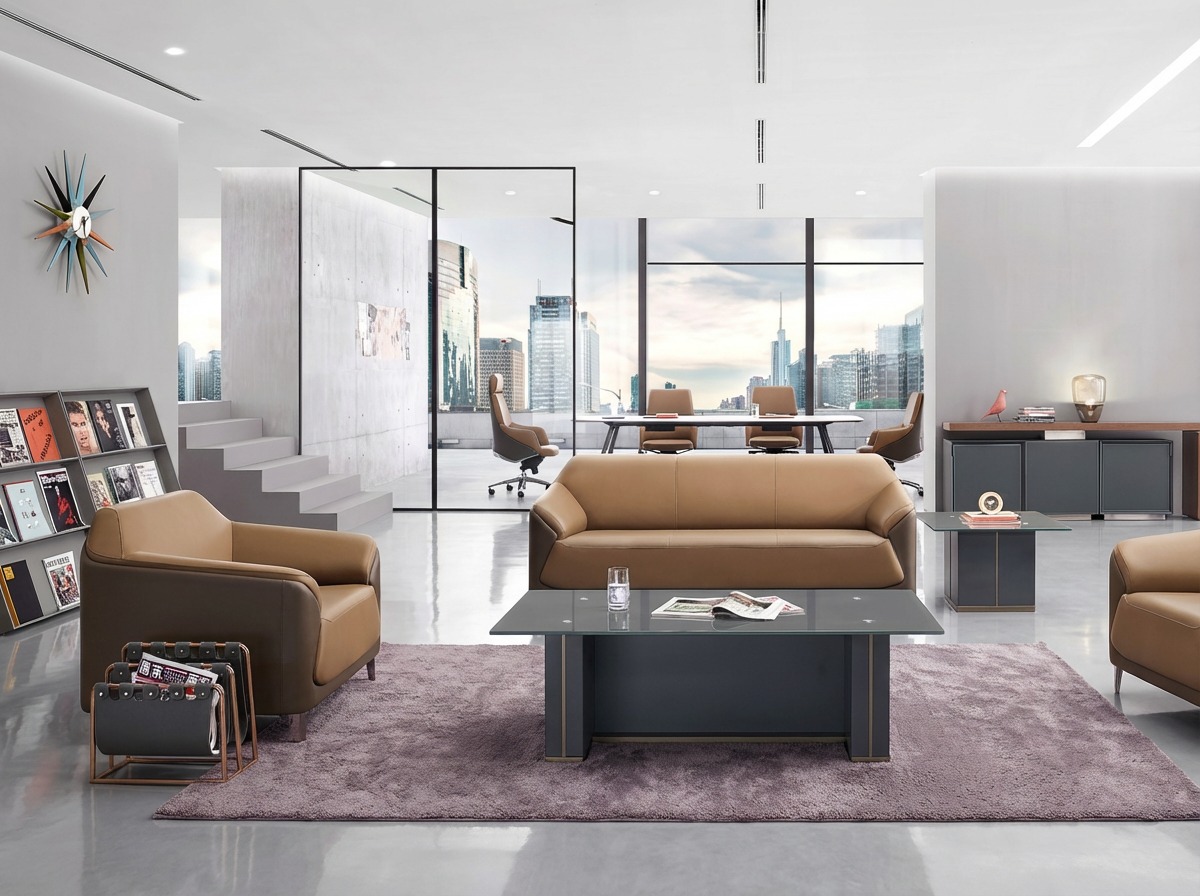
In offices, co-working hubs, and hospitality environments, modular sofas from Siwares have become a preferred investment for teams seeking both flexibility and financial prudence.
1. The Lifecycle Equation: Where Modular Design Wins
A sofa’s value is measured not only by its purchase price but by its total cost of ownership (TCO) — including delivery, maintenance, and disposal.
Comparison: Fixed vs. Modular Sofa Economics
| Cost Category | Fixed Sofa | Modular Sofa |
|---|---|---|
| Initial Investment | Lower upfront | Slightly higher, but scalable |
| Maintenance & Repair | Complex and costly | Easy panel or module replacement |
| Relocation Cost | High (bulk transport) | Compact, flat-pack structure |
| Longevity | 3–5 years average | 7–10 years with reconfigurable system |
| Resale / Reuse Value | Minimal | High, due to interchangeable components |
Result: Over a 10-year period, modular sofas save 25–35% in total operational cost, especially in multi-location enterprises or hospitality rollouts.
2. Engineering Logic Behind Modular Cost Efficiency
What makes modular furniture inherently cost-saving is not marketing — it’s engineering discipline.
Key Structural Factors:
-
Interlocking Connectors: Replace or rotate parts without re-upholstering the whole unit.
-
Standardized Frames: Shared base modules reduce manufacturing complexity and spare-part costs.
-
Detachable Cushions & Covers: Simplifies cleaning and replacement cycles.
-
Flat-Pack Logistics: Cuts freight volume by up to 40%, lowering CO₂ and customs charges.
-
Universal Leg & Bracket System: Enables integration between sofa collections, extending design life.
At Siwares, modular systems are produced under ISO 9001 and BIFMA standards to guarantee precision assembly and interchangeability across product lines.
3. Reconfiguration as a Business Advantage
Modern workspaces and hospitality interiors change frequently — mergers, expansions, rebranding, or layout optimization all require flexible furniture.
Instead of replacing entire sets, modular sofas allow:
-
Rapid layout changes (L-shape to straight-line or semi-circle).
-
Zone repurposing from collaboration to reception use.
-
Consistent brand aesthetics even when functions differ.
-
Lower waste generation, aligning with ESG and sustainability goals.
For example, a 30-module Siwares system used in a co-working chain was reconfigured six times over four years — with zero replacement cost and 98% component retention.
4. Material Efficiency and Sustainable ROI
Material sustainability is another cost lever.
Traditional fixed sofas often use glued frames and non-recyclable foams, while modular systems use mechanical joints and replaceable parts, maximizing lifecycle efficiency.
Economic Implications of Sustainable Design:
-
Reduced waste disposal costs by 20–25%.
-
Simplified upholstery renewal (replace only worn panels).
-
Lower energy and material consumption in refurbishment.
According to the European Furniture Industries Confederation (EFIC), modular systems cut lifecycle environmental costs by up to 30% compared to traditional models.
Siwares employs FSC-certified wood, water-based adhesives, and recyclable steel frames — making every modular collection both cost-smart and eco-aligned.
5. Logistics and Global Deployment Efficiency
For multi-location companies or hospitality franchises, transportation and installation can represent 10–15% of the furniture budget.
Modular logistics advantages include:
-
Compact packaging reduces shipping volume and storage needs.
-
On-site assembly saves import duties in destination markets.
-
Standardized replacement parts simplify cross-border support.
Siwares supports flat-pack export solutions with detailed assembly manuals and international warranty coverage — ensuring seamless rollout for global clients.
6. Case Example: Long-Term ROI for a Hospitality Chain
A regional hotel group partnered with Siwares to upgrade its guest lounge seating across 10 locations.
Instead of purchasing 10 different sofa sets, the client implemented a modular system adaptable to each lobby layout.
Measured Results (3-Year ROI):
-
Total procurement savings: 28%
-
Logistics cost reduction: 35%
-
Refurbishment time reduced: 50%
-
Waste generated: Near zero (due to replaceable parts)
This project demonstrated how design flexibility and operational efficiency translate directly into financial return — not as marketing, but as measurable asset performance.
7. Procurement Checklist for Modular Sofa Buyers
When selecting modular commercial sofas, verify that your supplier provides:
-
Interchangeable module system with shared frames and connectors.
-
Certified durability (BIFMA / EN standards).
-
Replaceable upholstery covers and easy-access maintenance.
-
OEM customization for dimensions, colors, and materials.
-
Flat-pack logistics support for international projects.
-
Spare parts availability over a minimum 5-year period.
Siwares integrates these specifications into every production run, ensuring long-term value for architects, developers, and corporate procurement teams alike.
Frequently Asked Questions
Q1: Do modular sofas cost more initially?
Slightly, but the lifecycle ROI is higher — saving 25–35% in maintenance and logistics over time.
Q2: How durable are modular connectors?
All Siwares connectors are tested for 10,000+ assembly cycles to ensure stability and precision.
Q3: Can modules from different series be combined?
Yes. Siwares maintains standardized joint systems across collections for seamless integration.
Q4: What’s the average delivery timeline?
For standard configurations: 30–40 working days. Custom OEM orders: 45–50 days.
Q5: Are modular sofas suitable for both office and hospitality spaces?
Absolutely. They’re ideal for dynamic environments requiring adaptable and cost-efficient layouts.
Sustainability Meets Strategy
In commercial interiors, cost efficiency is no longer about buying cheaper — it’s about buying smarter.
Through modular engineering, scalable logistics, and responsible sourcing,
Siwares modular sofas deliver not only comfort but measurable savings across the entire product lifecycle.
Learn more about modular commercial furniture systems at the Siwares homepage
or request tailored OEM solutions via the Siwares contact page.