
Modern Meeting Desk with Integrated Display Panel

Product Overview   A modern meeting desk is often the piece that decides whether a small discussion feels improvised or structured. In shared offices, design studios, innovation labs, and client-facing rooms, buyers usually want one surface that can handle quick collaboration, a laptop, a coffee cup, and sometimes a screen or privacy element without crowding the room. This modern meeting desk addresses that problem with a central tabletop layout, open seating access, and an integrated end panel that can serve as a display area or divider in the meeting zone.   Foshan Siwares Technology Co., Ltd. develops office furniture for real working environments, including desks, modular office pods, seating, and complete workplace solutions. Based on the visible structure, this product fits the broader category of collaborative office furniture and can be read as a flexible meeting table system rather than a simple standalone table. It is suitable for compact meeting rooms, open-plan huddle spaces, and presentation corners where teams need to gather around a practical work surface.   The design language is straightforward: rounded tabletop corners, a thick pedestal base in a brushed metal finish, and a vertical panel at one end that appears to support a screen or act as a privacy partition. That combination makes it relevant for buyers who want a modern office meeting desk with a more purposeful layout than a conventional conference table. What the Design Solves for Buyers   Many workplaces still rely on oversized conference tables that occupy too much floor area or undersized desks that do not support group discussion. This conference meeting desk offers a middle ground. It gives a focused meeting surface for two to four seated users while keeping the footprint visually light. The open leg space and rounded edges make it easier to move in and out, which matters in quick internal meetings and informal client conversations.   For companies managing hybrid work, the built-in end panel may help create a defined focal point for presentations, shared reference content, or a privacy boundary between a discussion area and surrounding workspace. In practice, that means fewer separate fixtures and less visual clutter. A single modern office furniture meeting setup can do the job of table, visual divider, and presentation support area. Visible Structure and Key Capabilities   Tabletop and Seating Layout   The tabletop appears large enough for a small group conversation and work session. It has a rectangular form with softened corners, which reduces sharp visual edges and improves circulation around the table. From the visible scale, it accommodates at least two to four seated users. The use of stools or chairs around the unit suggests a bar-height or counter-height presentation style, although the exact dimensions are not provided.   This format is especially useful in situations where the meeting is short, active, and centered on discussion rather than long-form seated work. A contemporary meeting desk with this geometry can also support sketching, laptop use, note-taking, and quick review of printed materials.   Integrated End Panel   At one end of the table, the vertical panel stands out as the defining feature. It looks like a hybrid element: part display mount, part divider, and possibly part acoustic or privacy feature. The visible white area suggests space for a screen or board-like insert, but the exact AV specification is not shown. Because of that, it is best described carefully as an integrated display/privacy partition area rather than a confirmed electronic system.   For buyers comparing a boardroom meeting table with a more compact collaborative setup, this end-panel concept is valuable. It creates a natural anchor point for eye contact during discussions and can support a more organized meeting flow without requiring a separate wall-mounted monitor in every room.   Base and Support Geometry   The base is a thick central pedestal in metallic gray, paired with a side arm or support that extends toward the tabletop and panel. This kind of structure usually helps keep the profile clean while preserving knee space and a stable visual center. The arrangement also suits a more modern office furniture meeting environment where equipment and people may need to share one zone without heavy bulk. Materials and Finish Options   From the visible surface treatment, the tabletop appears to use a wood or wood-look finish in a light brown tone. The supporting elements show matte-to-satin metallic gray surfaces, and the panel reads as a gray felt-like or fabric-like finish. These finishes work well together because they avoid glossy reflections and keep the furniture looking calm in daylight and under office lighting.   Foshan Siwares Technology Co., Ltd. states that it uses eco-friendly E1-grade materials across its office product range. While the exact construction of this specific item is not fully visible, buyers can reasonably expect a manufacturing approach aligned with office-grade panel furniture and durable surface finishing. If a project requires a darker or lighter tone, wood grain variations, metal color changes, or alternate panel textures, those details can typically be discussed during customization.   For a modern meeting table intended for a commercial interior, finish selection matters as much as shape. A matte surface reduces glare from overhead fixtures and screens. A wood tone adds warmth to rooms that might otherwise feel too technical. A felt-like panel can soften the visual language of the space and support a more relaxed meeting atmosphere. Manufacturing and Build Approach   The visible construction suggests a furniture fabrication process based on shaped panels, edge finishing, and metal support assembly. In a product like this, the tabletop and vertical elements are usually produced through CNC cutting or precision panel processing, followed by surface lamination, veneering, or coating. The metal base and brace would then be matched to the top assembly for stability and appearance.   As with many executive meeting desk systems, the real value is in how the parts come together cleanly. Tight alignment between the tabletop, pedestal, and display side creates a more refined piece of office furniture. If the panel is intended for AV use or privacy function, the structure may also need hidden reinforcement or bracket integration, though the exact internal method is not visible and should not be assumed.   Siwares emphasizes advanced machinery, efficient workflows, and scalable production. That matters for projects that need repeated consistency across multiple rooms, such as a chain of offices, co-working spaces, or a design campus where several meeting points must look coordinated. Application Scenarios   This type of modern office meeting desk works well in spaces where meetings are short, frequent, and collaborative rather than formal and extended. A few typical uses include:   - Design studios that need a shared table for sketches, mockups, and client reviews - Open-plan offices where teams gather for huddles without booking a full conference room - Innovation labs that combine discussion, visual reference, and quick decision-making - Client presentation areas that need a clean focal point and a professional finish - Co-working spaces where members expect flexible meeting furniture with a compact footprint   Because the layout is visually lighter than many standard boardroom meeting table designs, it can also fit hospitality lounges, showroom meeting zones, and internal strategy corners in corporate offices. Quality Control and Buyer Confidence   For B2B buyers, the key question is not only how a desk looks, but whether it can be delivered consistently and used across several rooms without quality drift. Siwares reports a manufacturing base of over 12,000 m², with multiple production lines, 200+ employees, and quality assurance practices supported by certifications for product safety and durability. Those points matter when a furniture project includes more than one table or needs matching finishes across a larger order.   In practical terms, buyers should still confirm the details that are specific to their project: exact dimensions, mounting method, whether the display element is included, cable access, and how the panel integrates with AV equipment if that is required. For a conference meeting desk used in client-facing rooms, these details can affect both installation and day-to-day use. Customization Guidance   Customization is often the deciding factor in office furniture procurement. A modern meeting desk can be adapted in several ways depending on the space plan. Buyers may want a different tabletop length, an alternate panel height, a change in wood tone, or a different metal finish to match the rest of the workplace. If the desk is intended for a wall-adjacent or pod-based setting, the support geometry may also need adjustment to coordinate with surrounding furniture.   When specifying a custom version, it helps to start with use case first and aesthetics second. Ask whether the room needs a presentation point, a privacy barrier, or just a compact collaborative surface. That will determine whether the panel should be more display-focused or more divider-focused. The same principle applies to the other wall-mounted or compact console-style desks in the product set: in small spaces, the shape and support strategy must follow the task.   For projects that include multiple rooms, consistency across a contemporary meeting desk series can be just as important as the individual piece. Matching finishes, edge profiles, and structural proportions help the whole workplace read as one system rather than a collection of separate items. How Buyers Should Evaluate the Right Version   Before placing an order, buyers should consider room size, seating style, user count, and whether the furniture needs to support screens or only conversation. A modern meeting table with an integrated panel is not always the best choice for every space, but it is a strong option when the room needs structure without heaviness. If the environment is more formal, an executive meeting desk with a broader surface might be preferable. If the space is casual or hybrid, this layout can feel more natural and efficient.   It is also worth checking how the table interacts with the rest of the interior. In a room with glass walls and hard finishes, a wood-look top and fabric-like panel can soften the atmosphere. In a creative office, the same piece can provide a visual anchor without overpowering the rest of the furniture. Call to Action   If you are planning a project that needs a modern meeting desk, a compact boardroom meeting table, or a customized modern office furniture meeting solution, Foshan Siwares Technology Co., Ltd. can support product selection, customization, and office layout coordination. Share your room size, seating target, finish preference, and whether you need a display/privacy element integrated into the design. From there, the team can help shape a meeting surface that fits the way your space actually works.
Inquiry Now
Modern Meeting Desk with Integrated Display Panel
Description
Privacy Policy
PDF

Product Overview

A modern meeting desk is often the piece that decides whether a small discussion feels improvised or structured. In shared offices, design studios, innovation labs, and client-facing rooms, buyers usually want one surface that can handle quick collaboration, a laptop, a coffee cup, and sometimes a screen or privacy element without crowding the room. This modern meeting desk addresses that problem with a central tabletop layout, open seating access, and an integrated end panel that can serve as a display area or divider in the meeting zone.

Foshan Siwares Technology Co., Ltd. develops office furniture for real working environments, including desks, modular office pods, seating, and complete workplace solutions. Based on the visible structure, this product fits the broader category of collaborative office furniture and can be read as a flexible meeting table system rather than a simple standalone table. It is suitable for compact meeting rooms, open-plan huddle spaces, and presentation corners where teams need to gather around a practical work surface.

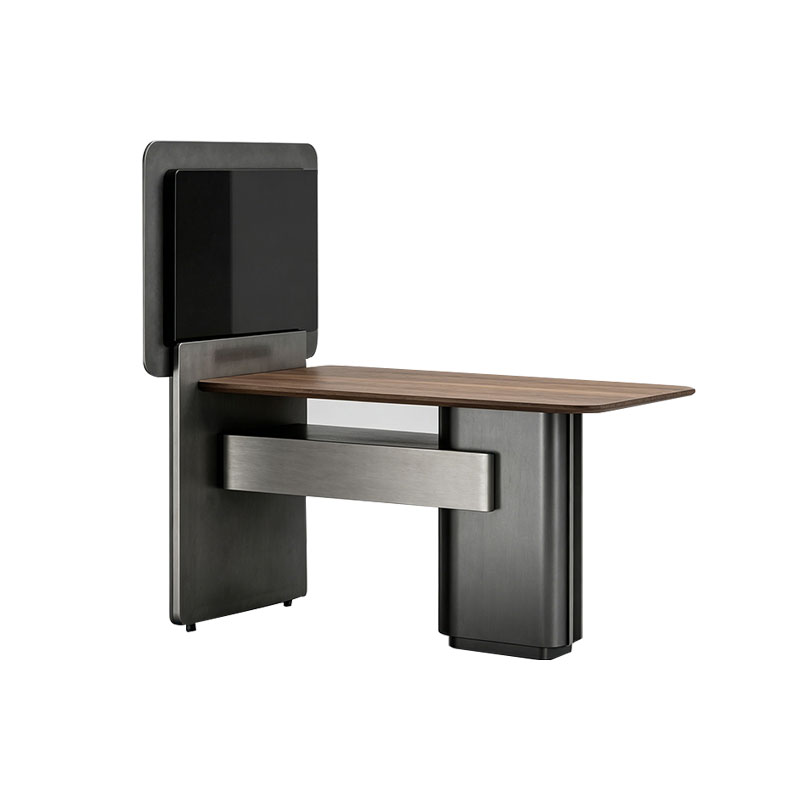
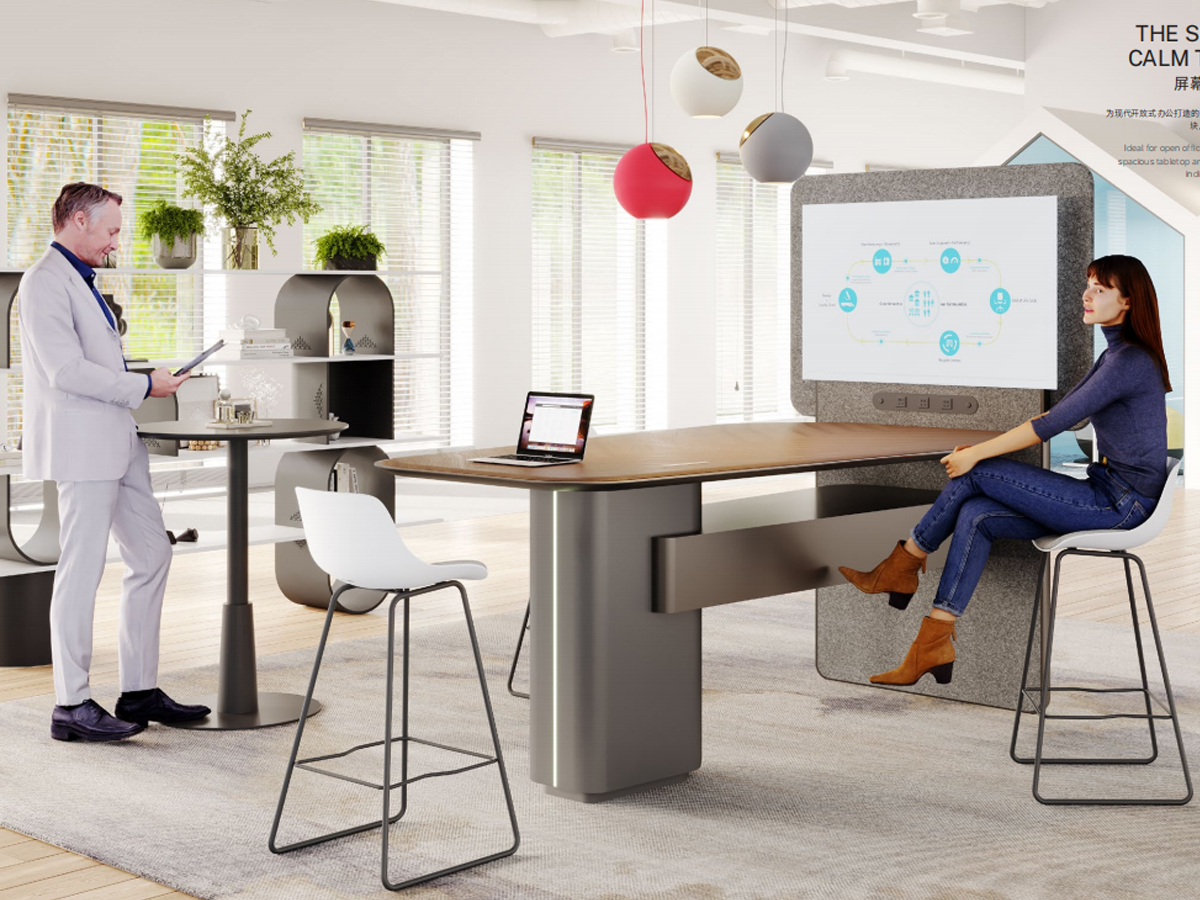
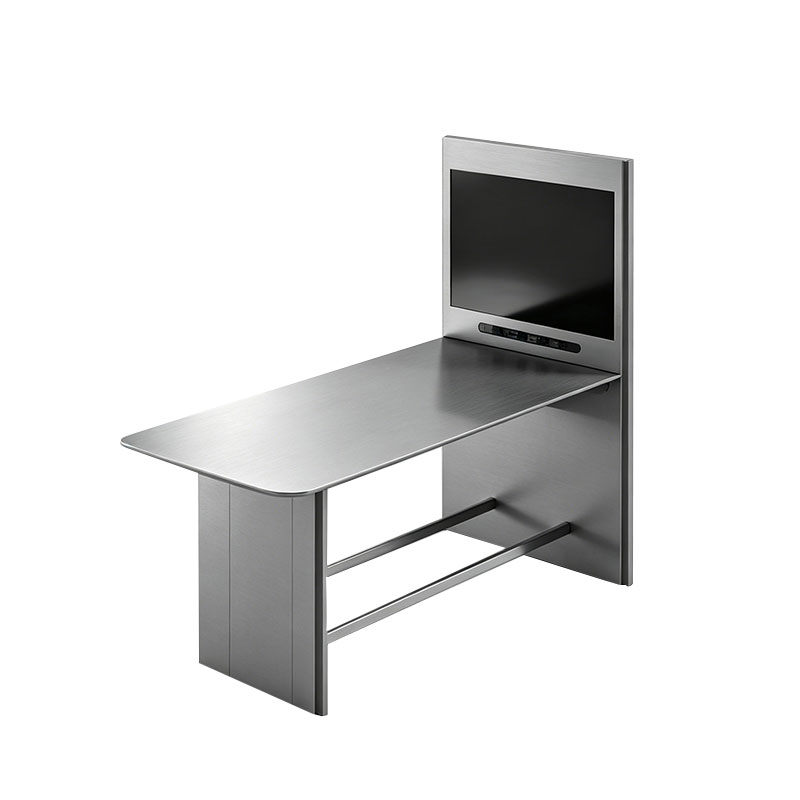
The design language is straightforward: rounded tabletop corners, a thick pedestal base in a brushed metal finish, and a vertical panel at one end that appears to support a screen or act as a privacy partition. That combination makes it relevant for buyers who want a modern office meeting desk with a more purposeful layout than a conventional conference table.


What the Design Solves for Buyers

Many workplaces still rely on oversized conference tables that occupy too much floor area or undersized desks that do not support group discussion. This conference meeting desk offers a middle ground. It gives a focused meeting surface for two to four seated users while keeping the footprint visually light. The open leg space and rounded edges make it easier to move in and out, which matters in quick internal meetings and informal client conversations.

For companies managing hybrid work, the built-in end panel may help create a defined focal point for presentations, shared reference content, or a privacy boundary between a discussion area and surrounding workspace. In practice, that means fewer separate fixtures and less visual clutter. A single modern office furniture meeting setup can do the job of table, visual divider, and presentation support area.

banner-3.jpg


Visible Structure and Key Capabilities

Modern Meeting Desk

Tabletop and Seating Layout

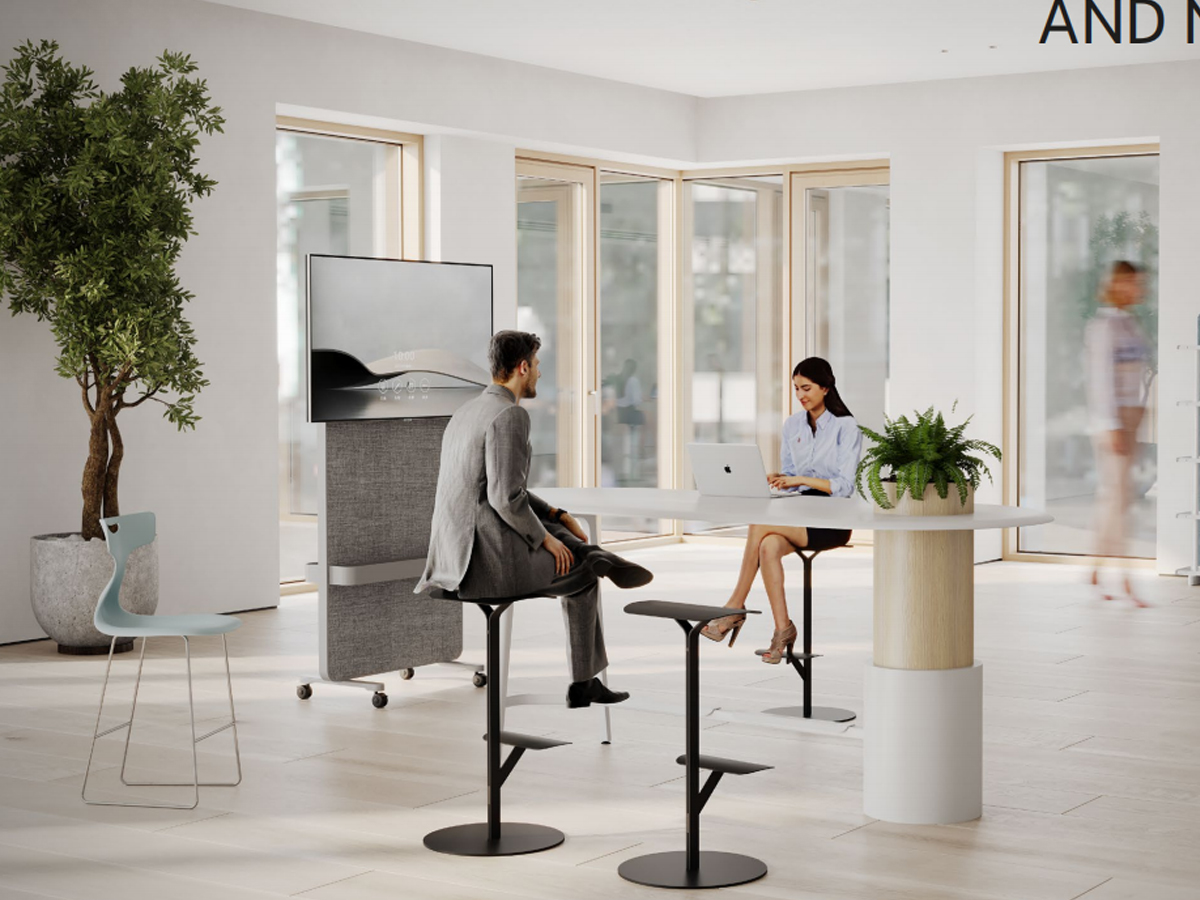
The tabletop appears large enough for a small group conversation and work session. It has a rectangular form with softened corners, which reduces sharp visual edges and improves circulation around the table. From the visible scale, it accommodates at least two to four seated users. The use of stools or chairs around the unit suggests a bar-height or counter-height presentation style, although the exact dimensions are not provided.

This format is especially useful in situations where the meeting is short, active, and centered on discussion rather than long-form seated work. A contemporary meeting desk with this geometry can also support sketching, laptop use, note-taking, and quick review of printed materials.

Integrated End Panel

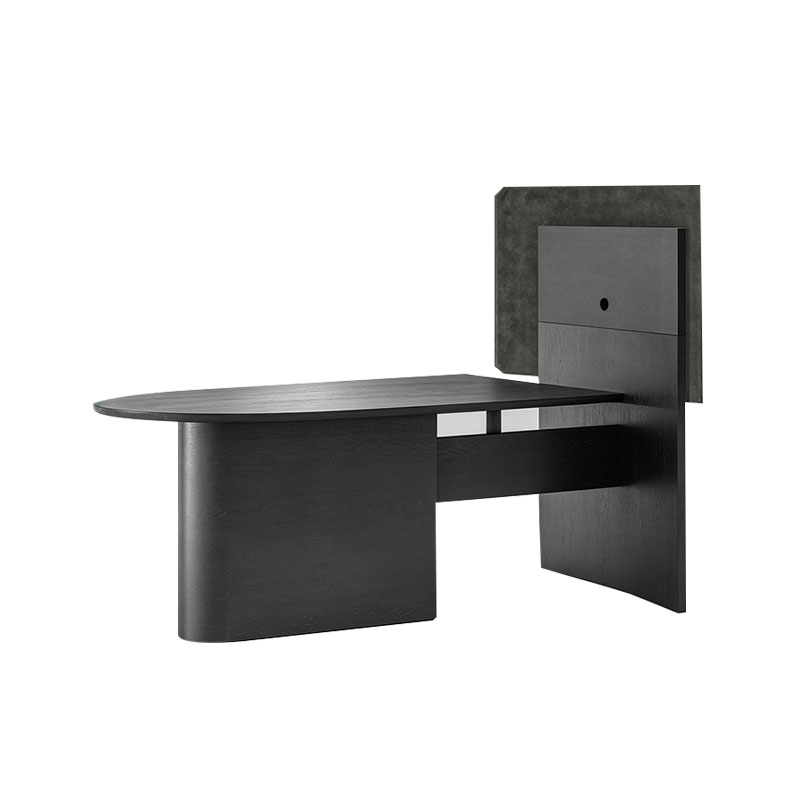
At one end of the table, the vertical panel stands out as the defining feature. It looks like a hybrid element: part display mount, part divider, and possibly part acoustic or privacy feature. The visible white area suggests space for a screen or board-like insert, but the exact AV specification is not shown. Because of that, it is best described carefully as an integrated display/privacy partition area rather than a confirmed electronic system.

For buyers comparing a boardroom meeting table with a more compact collaborative setup, this end-panel concept is valuable. It creates a natural anchor point for eye contact during discussions and can support a more organized meeting flow without requiring a separate wall-mounted monitor in every room.

Base and Support Geometry

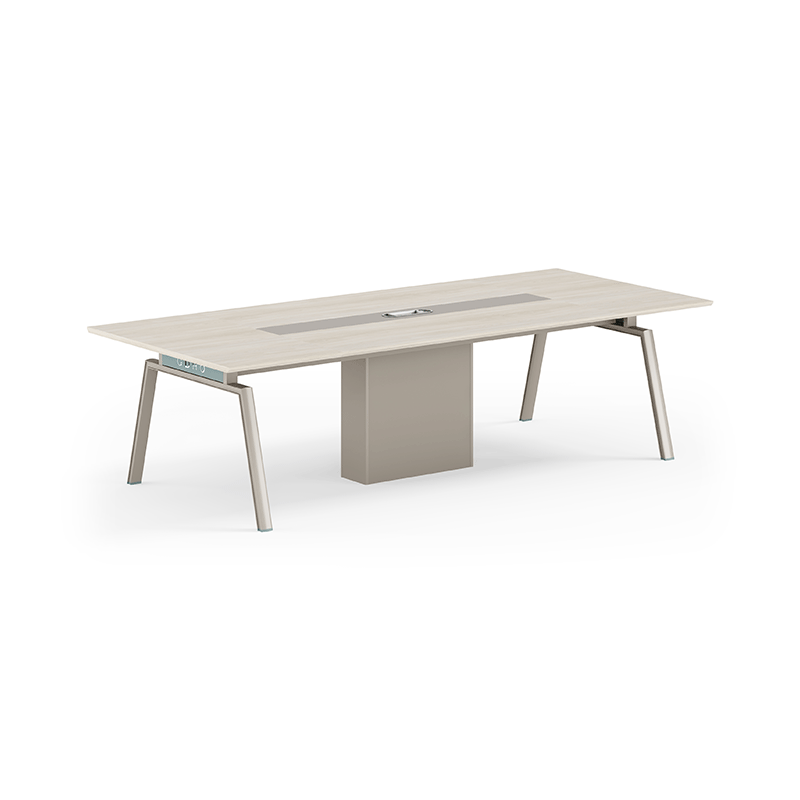
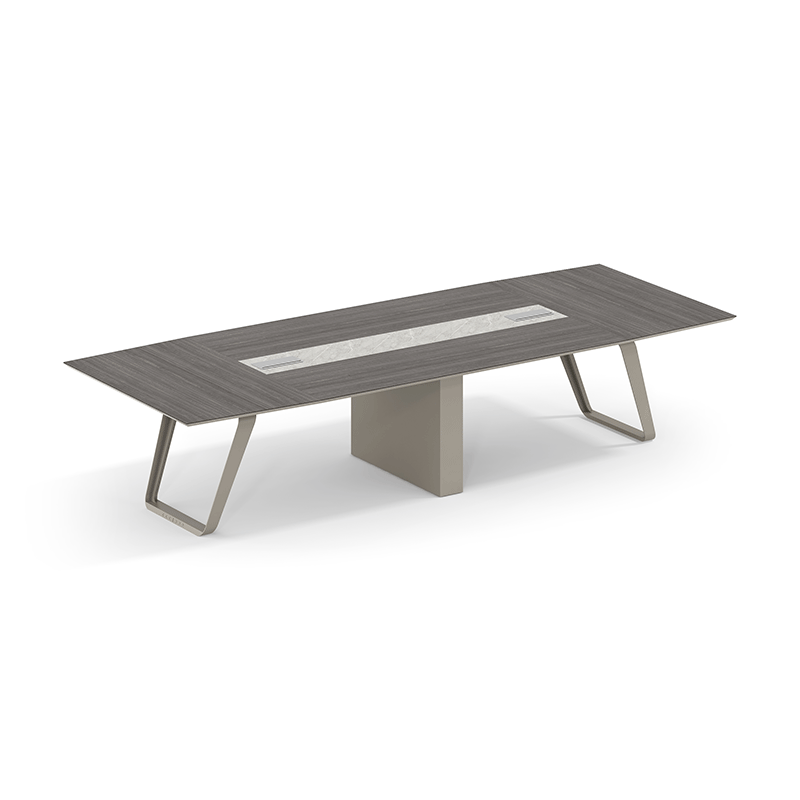
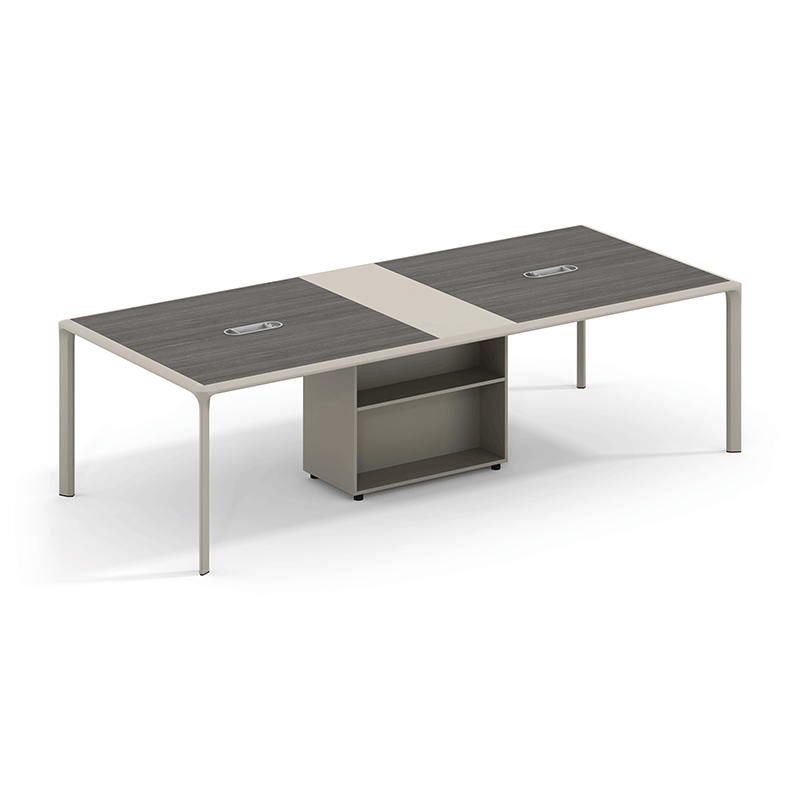
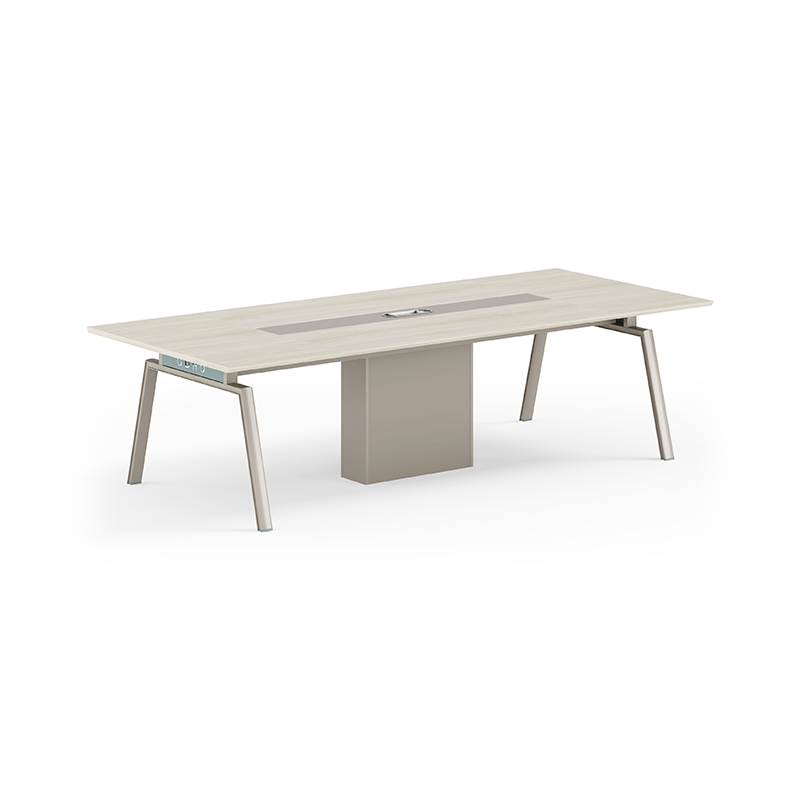
The base is a thick central pedestal in metallic gray, paired with a side arm or support that extends toward the tabletop and panel. This kind of structure usually helps keep the profile clean while preserving knee space and a stable visual center. The arrangement also suits a more modern office furniture meeting environment where equipment and people may need to share one zone without heavy bulk.


Materials and Finish Options

From the visible surface treatment, the tabletop appears to use a wood or wood-look finish in a light brown tone. The supporting elements show matte-to-satin metallic gray surfaces, and the panel reads as a gray felt-like or fabric-like finish. These finishes work well together because they avoid glossy reflections and keep the furniture looking calm in daylight and under office lighting.

Foshan Siwares Technology Co., Ltd. states that it uses eco-friendly E1-grade materials across its office product range. While the exact construction of this specific item is not fully visible, buyers can reasonably expect a manufacturing approach aligned with office-grade panel furniture and durable surface finishing. If a project requires a darker or lighter tone, wood grain variations, metal color changes, or alternate panel textures, those details can typically be discussed during customization.

For a modern meeting table intended for a commercial interior, finish selection matters as much as shape. A matte surface reduces glare from overhead fixtures and screens. A wood tone adds warmth to rooms that might otherwise feel too technical. A felt-like panel can soften the visual language of the space and support a more relaxed meeting atmosphere.


Manufacturing and Build Approach

The visible construction suggests a furniture fabrication process based on shaped panels, edge finishing, and metal support assembly. In a product like this, the tabletop and vertical elements are usually produced through CNC cutting or precision panel processing, followed by surface lamination, veneering, or coating. The metal base and brace would then be matched to the top assembly for stability and appearance.

As with many executive meeting desk systems, the real value is in how the parts come together cleanly. Tight alignment between the tabletop, pedestal, and display side creates a more refined piece of office furniture. If the panel is intended for AV use or privacy function, the structure may also need hidden reinforcement or bracket integration, though the exact internal method is not visible and should not be assumed.

Siwares emphasizes advanced machinery, efficient workflows, and scalable production. That matters for projects that need repeated consistency across multiple rooms, such as a chain of offices, co-working spaces, or a design campus where several meeting points must look coordinated.


Application Scenarios

This type of modern office meeting desk works well in spaces where meetings are short, frequent, and collaborative rather than formal and extended. A few typical uses include:

- Design studios that need a shared table for sketches, mockups, and client reviews
- Open-plan offices where teams gather for huddles without booking a full conference room
- Innovation labs that combine discussion, visual reference, and quick decision-making
- Client presentation areas that need a clean focal point and a professional finish
- Co-working spaces where members expect flexible meeting furniture with a compact footprint

Because the layout is visually lighter than many standard boardroom meeting table designs, it can also fit hospitality lounges, showroom meeting zones, and internal strategy corners in corporate offices.


Quality Control and Buyer Confidence

For B2B buyers, the key question is not only how a desk looks, but whether it can be delivered consistently and used across several rooms without quality drift. Siwares reports a manufacturing base of over 12,000 m², with multiple production lines, 200+ employees, and quality assurance practices supported by certifications for product safety and durability. Those points matter when a furniture project includes more than one table or needs matching finishes across a larger order.

In practical terms, buyers should still confirm the details that are specific to their project: exact dimensions, mounting method, whether the display element is included, cable access, and how the panel integrates with AV equipment if that is required. For a conference meeting desk used in client-facing rooms, these details can affect both installation and day-to-day use.


Customization Guidance

Customization is often the deciding factor in office furniture procurement. A modern meeting desk can be adapted in several ways depending on the space plan. Buyers may want a different tabletop length, an alternate panel height, a change in wood tone, or a different metal finish to match the rest of the workplace. If the desk is intended for a wall-adjacent or pod-based setting, the support geometry may also need adjustment to coordinate with surrounding furniture.

When specifying a custom version, it helps to start with use case first and aesthetics second. Ask whether the room needs a presentation point, a privacy barrier, or just a compact collaborative surface. That will determine whether the panel should be more display-focused or more divider-focused. The same principle applies to the other wall-mounted or compact console-style desks in the product set: in small spaces, the shape and support strategy must follow the task.

For projects that include multiple rooms, consistency across a contemporary meeting desk series can be just as important as the individual piece. Matching finishes, edge profiles, and structural proportions help the whole workplace read as one system rather than a collection of separate items.


How Buyers Should Evaluate the Right Version

Before placing an order, buyers should consider room size, seating style, user count, and whether the furniture needs to support screens or only conversation. A modern meeting table with an integrated panel is not always the best choice for every space, but it is a strong option when the room needs structure without heaviness. If the environment is more formal, an executive meeting desk with a broader surface might be preferable. If the space is casual or hybrid, this layout can feel more natural and efficient.

It is also worth checking how the table interacts with the rest of the interior. In a room with glass walls and hard finishes, a wood-look top and fabric-like panel can soften the atmosphere. In a creative office, the same piece can provide a visual anchor without overpowering the rest of the furniture.


Call to Action

If you are planning a project that needs a modern meeting desk, a compact boardroom meeting table, or a customized modern office furniture meeting solution, Foshan Siwares Technology Co., Ltd. can support product selection, customization, and office layout coordination. Share your room size, seating target, finish preference, and whether you need a display/privacy element integrated into the design. From there, the team can help shape a meeting surface that fits the way your space actually works.
site-logo

CONTACT

  • Phone:
    +8618128768974
  • Whatsapp:
    +8618128768974+8617776787187
  • Email:
    phyllis@siwaresfurniture.comlemon@siwaresfurniture.com

ABOUT US

PRODUCTS

    SERVICE

    CONTACT US

    © 2025 Siwares . All rights reserved.