
Why Sofa Systems Define Modern Commercial Spaces
Sofas are no longer background furniture.
In offices, they drive collaboration and informal meetings; in hotels, they create brand emotion and customer trust.
But the challenge for procurement teams lies in balancing comfort, durability, and layout adaptability — especially across large projects with varied design languages.
A poorly designed sofa can disrupt spatial flow, wear out prematurely, or send the wrong message about your brand.
Choosing the right system, therefore, is not about style preference; it’s about strategic design that supports human behavior and operational demands.
That’s where Siwares, as a specialized commercial sofa manufacturer, offers practical frameworks for performance-driven selection.
1. Structure Before Style: Understanding Commercial-Grade Build Logic
Most office or hospitality environments demand higher load-bearing performance, modular flexibility, and compliance with fire safety standards.
The underlying frame and support structure are what separate true commercial furniture from residential-grade products.
Key Structural Considerations:
-
Load Distribution: Reinforced internal bracing prevents long-term seat deformation.
-
Frame Integrity: Kiln-dried hardwood or steel frames ensure consistent stability under heavy daily use.
-
Connection Systems: Hidden brackets allow reconfiguration between linear, L-shaped, or circular layouts.
-
Foam Density: High-resilience foam (≥35D) maintains comfort over extended usage cycles.
-
Fire Retardancy: Fabrics tested under BS5852 / CAL117 standards meet global safety compliance.
At Siwares, every sofa set is built to BIFMA commercial durability benchmarks, ensuring that even in hotel lobbies or public lounges, comfort never compromises endurance.
2. Material Science: Balancing Aesthetic Appeal and Maintenance Reality
In multi-user spaces, material choice is not just about color or touch — it’s about wear life, cleanability, and acoustic quality.
Common Material Paths for Office & Hospitality Projects:
-
Fabric Upholstery: Breathable, acoustic-friendly, ideal for collaborative zones.
-
Faux Leather (PU or Microfiber): Easy to wipe clean, suitable for reception areas or cafés.
-
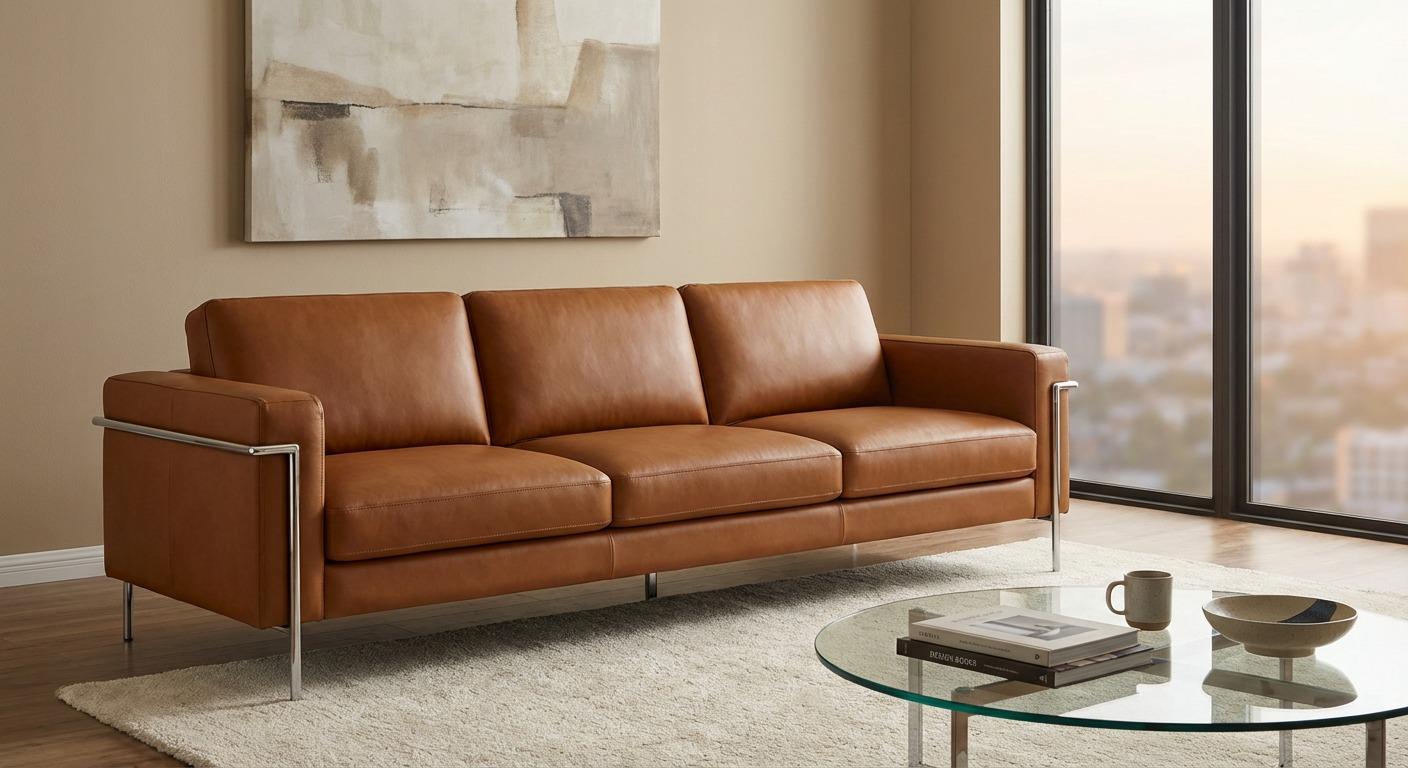
Genuine Leather: Luxury touch and natural patina for executive or hospitality suites.
-
Performance Textiles: Stain-resistant, anti-bacterial, and UV-stable for high-traffic areas.
-
Hybrid Surfaces: Fabric-leather combinations balance texture and cost across modular systems.
Siwares curates fabrics and finishes with ≥50,000 Martindale rub counts and certified colorfastness — ensuring consistency across large-volume orders.
3. Space Typology and Human Behavior: How Design Defines Use
A sofa is only as effective as its spatial context.
By analyzing how users move, meet, or rest in each environment, you can define the correct seating system for each functional zone.
-
Office Reception Areas: Sofas communicate credibility — formal silhouettes, neutral tones, firm seating.
-
Collaborative Zones: Modular or sectional designs with low backs encourage interaction.
-
Executive Lounges: Deeper seats, premium finishes, and integrated tables for relaxed meetings.
-
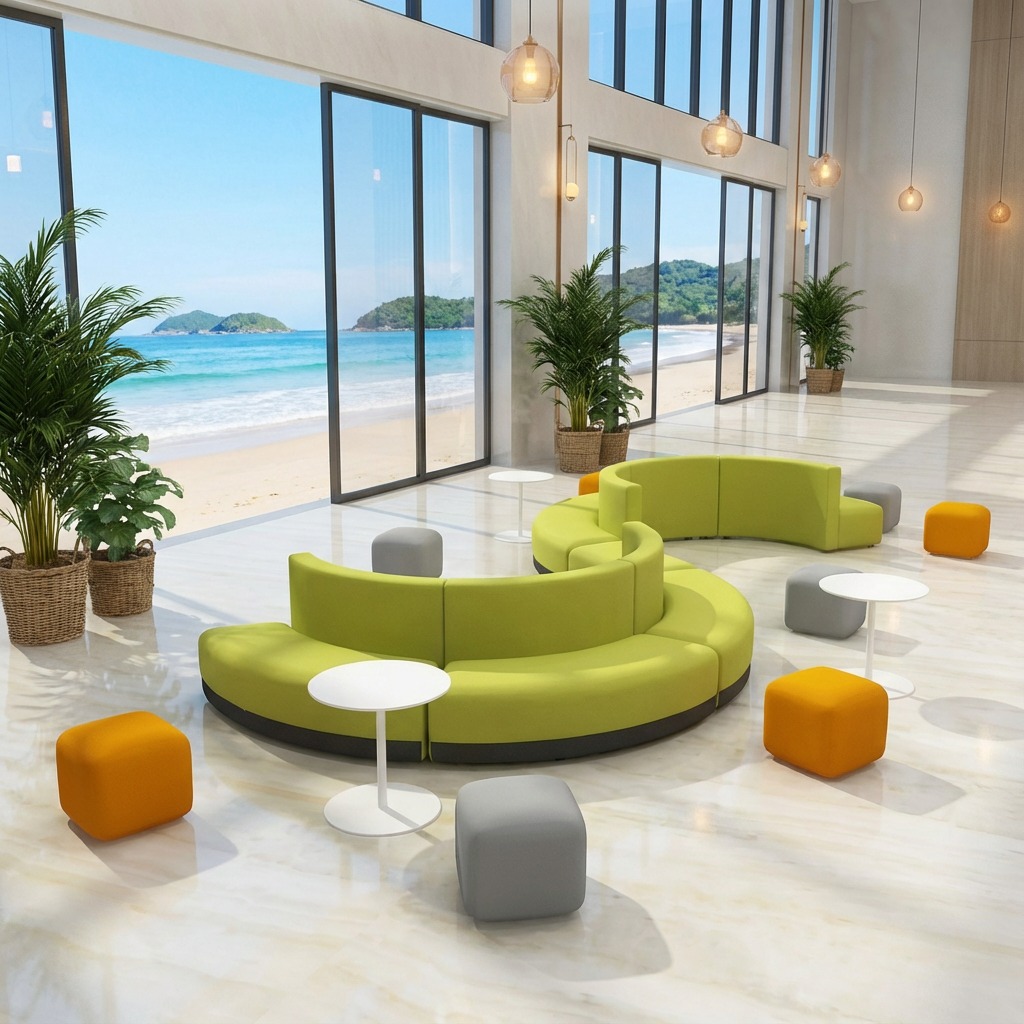
Hospitality Lobbies: Statement pieces that carry brand tone — curved or asymmetrical forms, high-end upholstery.
-
Guest Waiting Areas: Compact configurations emphasizing hygiene, airflow, and easy cleaning.
In essence, a sofa is a social tool — it choreographs posture, proximity, and perception.
4. Choosing the Right System: A Comparative Selection Framework
| Project Type | Ideal Sofa System | Material Focus | Functionality Priority |
|---|---|---|---|
| Corporate Office | Modular linear sofa | Fabric + steel frame | Easy reconfiguration for meetings |
| Co-working Space | Sectional set with ottoman | HPL + fabric | Informal and collaborative layout |
| Hotel Lobby | Curved statement sofa | Leather / PU | Visual focal point, comfort retention |
| Waiting Lounge | Compact 2–3 seater bench | Microfiber | Hygiene and easy cleaning |
| Residential Lobby / Apartment Club | Deep-cushion modular sofa | Fabric + foam | Comfort and spatial warmth |
Each option can be further customized through Siwares’ OEM system, adjusting leg height, foam firmness, or color palette to match your project branding.
5. Integration and Modularity: Designing for Longevity
The smartest investment in commercial seating is adaptability.
Modular sofa systems allow businesses and hospitality brands to evolve layouts without replacing furniture.
At Siwares, modules are designed with standardized connectors, universal leg systems, and replaceable panels — allowing new configurations without additional inventory.
This approach doesn’t just save cost; it extends product life cycles while maintaining brand consistency across locations.
In long-term facility management, modularity equals both sustainability and design freedom.
6. Case Example: Multi-Site Corporate Rollout
A European tech company commissioned Siwares to furnish 20 branch offices.
Their requirement: consistent design across spaces of different sizes and functions.
Siwares provided a modular sectional sofa system with standardized internal frames and interchangeable backrest panels.
This allowed seamless adaptation to open lounges, executive floors, and waiting areas.
Results after one year:
-
Maintenance cost reduced by 30% due to replaceable covers.
-
Visual brand consistency maintained across 15+ locations.
-
Zero structural failures after 60,000 usage cycles.
This illustrates how a well-engineered sofa system can unify global environments — functionally and visually.
7. Procurement Checklist for Project Buyers
Before finalizing a supplier, ensure your product meets these essential criteria:
-
Commercial Certification: Look for BIFMA, EN, or ISO compliance.
-
Fire & Safety Standards: Must meet BS5852 / CAL117 / TB133 depending on project geography.
-
OEM/ODM Support: Enables custom dimensions, branding, and modular scalability.
-
Maintenance Efficiency: Check for removable covers and accessible base cleaning.
-
Logistics Planning: Flat-pack or KD design reduces freight volume and installation time.
Every Siwares order includes technical drawings, fabric test reports, and assembly manuals — giving architects full control over specification and performance documentation.
Frequently Asked Questions
Q1: What is the standard lead time for large commercial sofa projects?
Typically 30–40 working days, depending on customization and volume.
Q2: Are Siwares sofas compliant with international safety standards?
Yes, all models are tested under BIFMA, EN16139, and ISO 9001.
Q3: Can materials be mixed in one project?
Absolutely. Siwares frequently combines fabrics, PU leather, or wood accents within the same modular framework.
Q4: How do modular sofas benefit multi-site rollouts?
They allow identical design with flexible sizing — simplifying procurement, logistics, and replacement.
Q5: Does Siwares assist in layout design?
Yes. Clients receive layout recommendations, 3D visual previews, and component mapping before production.
Design That Connects Comfort with Business Logic
A sofa system is not just a place to sit — it’s a functional investment in user experience and brand expression.
By uniting modular engineering, durable materials, and global manufacturing standards,
Siwares helps offices and hospitality venues create spaces that look inviting, perform reliably, and scale intelligently.
Explore Siwares’ full range of commercial sofa solutions at the Siwares homepage
or discuss your upcoming project with our team via the Siwares contact page.